Look for an etched stamp in a corner of the pane, a permanent approval label on the frame, and a faint line at the cut edge of the glass where the interlayer sits.
Martin County is in a wind-borne debris region, not the High Velocity Hurricane Zone - that applies to Miami-Dade and Broward.
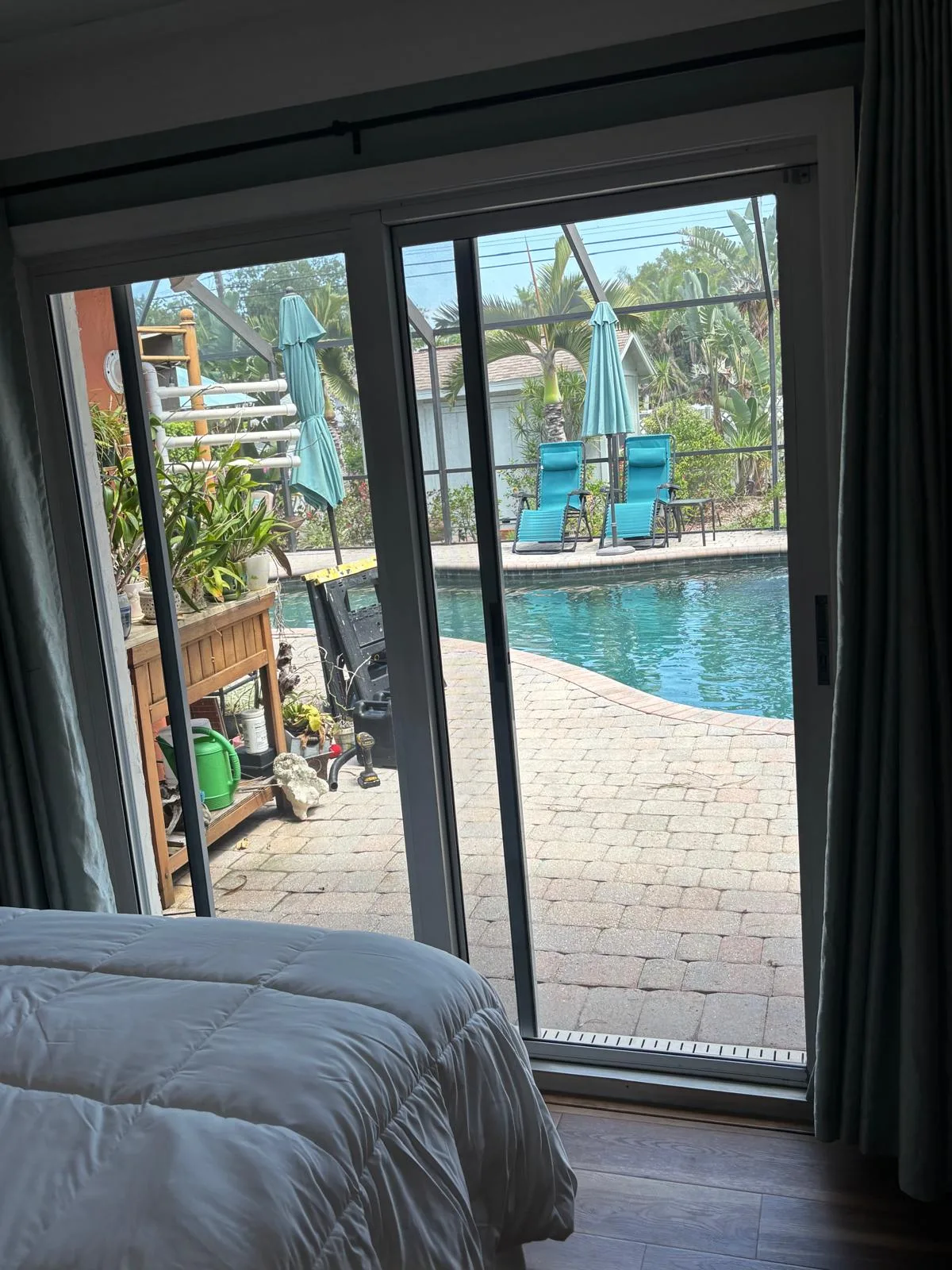
Why It Matters Before a Repair
Impact-rated doors are certified as complete assemblies. The glass, the frame and the hardware were tested together, and the rating belongs to the combination rather than to any one part.
Drop ordinary tempered glass into that frame and the door still looks correct and still functions. What it no longer has is the rating, and nothing on the door announces that.
That is the whole reason to check before ordering glass, not after.
Check One: The Etched Stamp
Most impact glazing carries a small etched or sandblasted mark in one corner of the pane, often low and easy to miss. It usually names the manufacturer and references the standard the unit was tested to.
Check all four corners on both panels, inside and out. Blinds, tint film and years of cleaning make these harder to spot than they should be.
Check Two: The Frame Label
Impact units normally carry a permanent label on the frame, commonly on the jamb or the head, listing an approval number. In Florida that is typically a state or Miami-Dade product approval reference.
Those numbers are searchable. The Florida Building Code product approval system lets you look up what a given approval actually covers.
Check Three: The Edge of the Glass
Laminated glass is two sheets bonded to a plastic interlayer. Look at the exposed cut edge where it meets the frame, at a low angle in good light, and you can often see a faint line running through the thickness.
Tempered glass has no such line. It is a single sheet, heat-treated, which is why it breaks into small blunt cubes rather than holding together.
This test is the least conclusive of the three, because the edge is usually mostly hidden, but it is a useful confirmation when you have already found a stamp.
What Martin County Actually Requires
Martin County sits in a wind-borne debris region. Exterior glazing in newer and updated homes is generally expected to be impact-rated or protected by shutters or panels.
The High Velocity Hurricane Zone rules that get quoted constantly apply specifically to Miami-Dade and Broward counties. Anyone telling you Stuart is HVHZ has that wrong, though the requirements here are real and are their own section of the code.
Older doors predating those requirements are common and are not automatically a problem. The question that matters is whether yours was rated, because that determines what can be fitted into it.
If You Cannot Tell
Do not guess, and do not let anyone order glass on an assumption. We identify the glazing type as part of quoting any glass repair, and we will tell you which one you have before anything is ordered.
If it turns out to be non-rated glass in a non-rated frame, that is fine and simplifies the job. The failure mode to avoid is finding out afterwards.
More From the Blog
Need a Sliding Door Looked At in Stuart?
Tell us what it is doing and we will tell you what it needs, with a price range before anyone comes out.
Call (772) 279-9387 Request a Quote