Stuart Sliding Door Repair services sliding doors annually - track cleaning, weep clearing, correct lubrication, roller and hardware inspection.
On the Treasure Coast this is not optional upkeep. Salt and sand are what destroy rollers and sills, and both are removable.
The failures we get called out for are almost all preventable, and they follow the same sequence. Sand packs the track, the rollers grind, the sill wears, the panel drops, the lock stops engaging.
Every step in that chain is downstream of debris in a track that nobody cleaned. Removing it once a year interrupts the whole sequence.
Typical Pricing - Sliding Door Preventive Maintenance in Stuart
| Service | Typical range |
|---|---|
| Single sliding door annual service | $125 - $215 |
| Each additional door, same visit | $65 - $115 |
| Service plus minor adjustment | $165 - $285 |
| Whole-home multi-door service | Quoted by door count |
| Post-storm inspection | $95 - $175 |
Ranges reflect typical national averages for this work and are shown for guidance only. Final cost depends on door size, glass type, parts and access. Call (772) 279-9387 for a firm quote on your door.
What an Annual Service Actually Covers
The track gets cleaned properly, not wiped. Debris packs into the drainage channels either side of the rolling surface and does not come out with a vacuum nozzle, so it is worked out mechanically and flushed.
The weep holes get cleared and flow-tested with fresh water. If water does not run out of the outside face, the sill is a trough, and a wet aluminium sill in salt air is how corroded sills begin.
Then the moving parts: roller condition and height, adjustment screw travel, mortise lock engagement, keeper security, weatherstrip contact, and the handle mechanism. Anything worn gets reported with a range before any work happens, not after.
The Right Lubricant, and the Wrong One
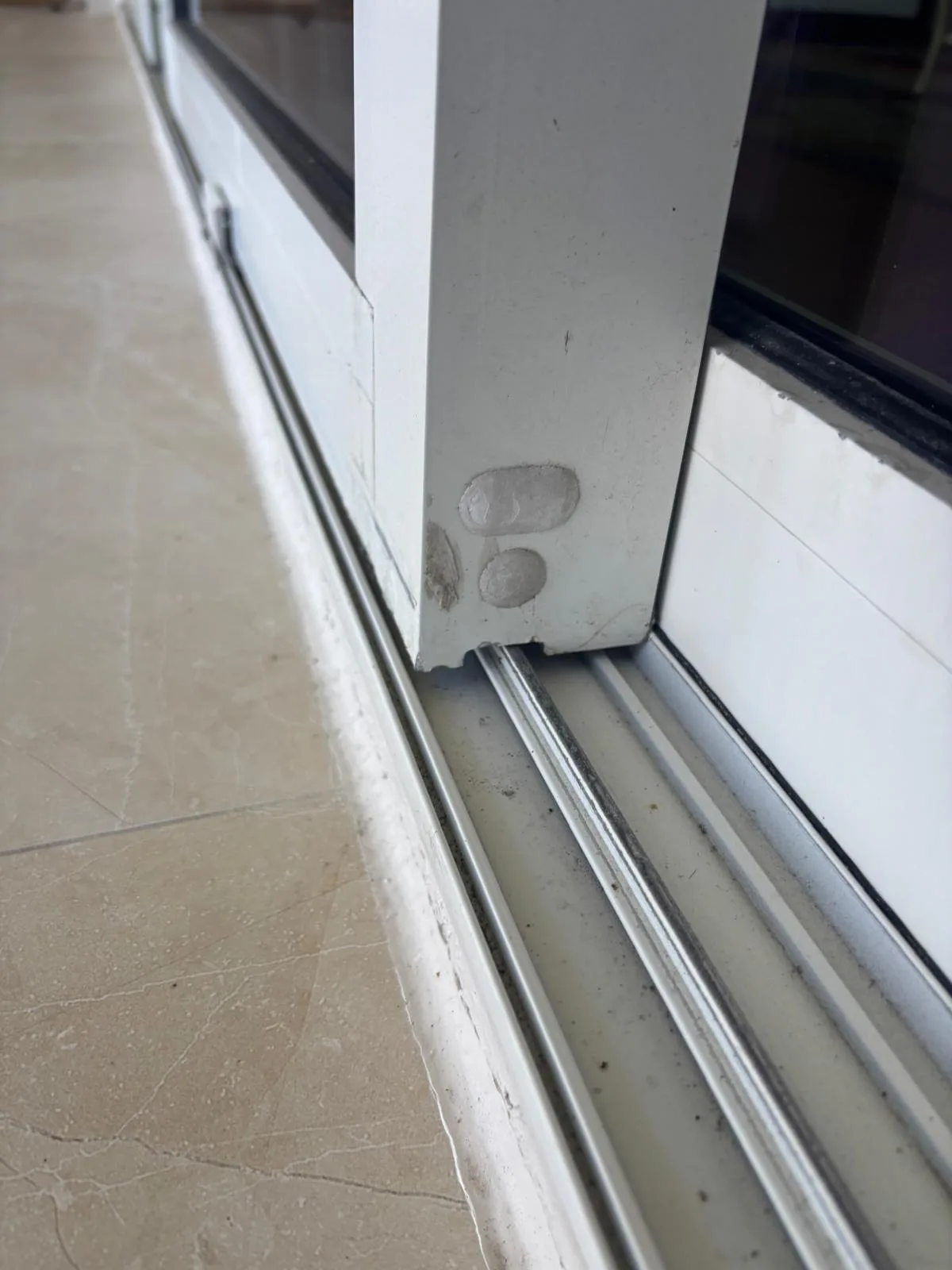
Use a dry PTFE or silicone product on a sliding door track. Dry film lubricants leave a slick surface without staying tacky, which is the entire requirement in a sandy coastal environment.
Do not use oil, grease or general-purpose penetrating spray. They work for about a week and then behave like flypaper for sand, and the resulting paste cuts rollers and sills faster than running the door dry would have.
One more thing worth knowing: the track is not where most lubricant should go. Clean the track and lubricate the roller wheels and the lock mechanism. A drenched track collects grit and achieves little.
What You Can Do Between Services
- Vacuum the track monthly. A crevice tool along both channels takes a minute and removes most of what causes wear.
- Flush the weep holes with fresh water. Confirm it runs out the outside face. This is the highest-value two minutes you can spend on the door.
- Rinse the exterior frame after storms. Salt spray reaches well inland here, and fresh water removes it before it starts working on the metal.
- Do not force a door that has become hard. Forcing bends track lips and elongates keeper screw holes, which turns a cheap fix into an expensive one.
- Check the gap along the top occasionally. A reveal that has started to taper is early warning, well before the door becomes difficult.
- Keep furniture off the track. Most bent track lips we see were stepped on or had something heavy set down on them.
Why the Treasure Coast Is Harder on Doors
Three things combine here that do not combine everywhere. Airborne salt from the Atlantic and the Indian River Lagoon, fine sand that gets into everything, and a humidity range that keeps metal damp for much of the year.
Salt corrodes bearing races inside rollers before it does anything visible outside. Sand acts as a cutting compound between wheel and sill. Humidity keeps both processes running rather than letting things dry out.
None of that is a reason to expect a short service life from a sliding door. It is a reason to clean it. A door that gets an annual service and the right lubricant will comfortably outlast an identical neglected door several times over.
Annual Service vs. Waiting for a Failure
| Repair | Replace | |
|---|---|---|
| Typical cost | Annual service: around a hundred to two hundred | Rollers and track cap: several hundred to over a thousand |
| Time on site | Usually under an hour | Half a day or more depending on scope |
| Door availability | Uninterrupted | Opening out of use during the work |
| Catches problems early | Yes, that is the purpose | No, by definition |
| Right call when | The door works and you want it to keep working | Something has already failed |
| Wrong call when | The door has already seized or dropped | The door is fine and just needs cleaning |
Frequently Asked Questions
Annually for most homes on the Treasure Coast, and twice a year for doors within a mile or so of open water or directly exposed to salt spray. The driver is salt and sand exposure rather than how often the door is used.
A dry PTFE or silicone spray. Avoid oil, grease and general-purpose penetrating sprays - they collect sand and accelerate the wear you were trying to prevent.
Most of it, yes, and you should. Vacuuming the track and flushing the weep holes are the two highest-value jobs and both are simple. The parts worth having done are roller condition and lock engagement, because those need judgement about wear.
If the door was exposed to driven salt spray or debris, it is worth a look. Salt left on hardware keeps working long after the storm, and a bent track lip found early is a cheap fix.
Substantially. Sand between wheel and sill is the primary wear mechanism, and it is entirely removable. Keeping the track clean and using a dry lubricant is the difference between replacing rollers occasionally and replacing them repeatedly.
Other Sliding Door Services in Stuart
Need Sliding Door Preventive Maintenance in Stuart?
Tell us what the door is doing and we will tell you what it needs, with a price range before we start.
Call (772) 279-9387 Request a Quote