Vacuum both channels, scrub the rolling surface, flush the weep holes until water runs out the outside face, then apply a dry PTFE or silicone lubricant.
Do not use oil, grease or general-purpose penetrating spray on a sliding door track - they collect sand and accelerate the wear you are trying to prevent.
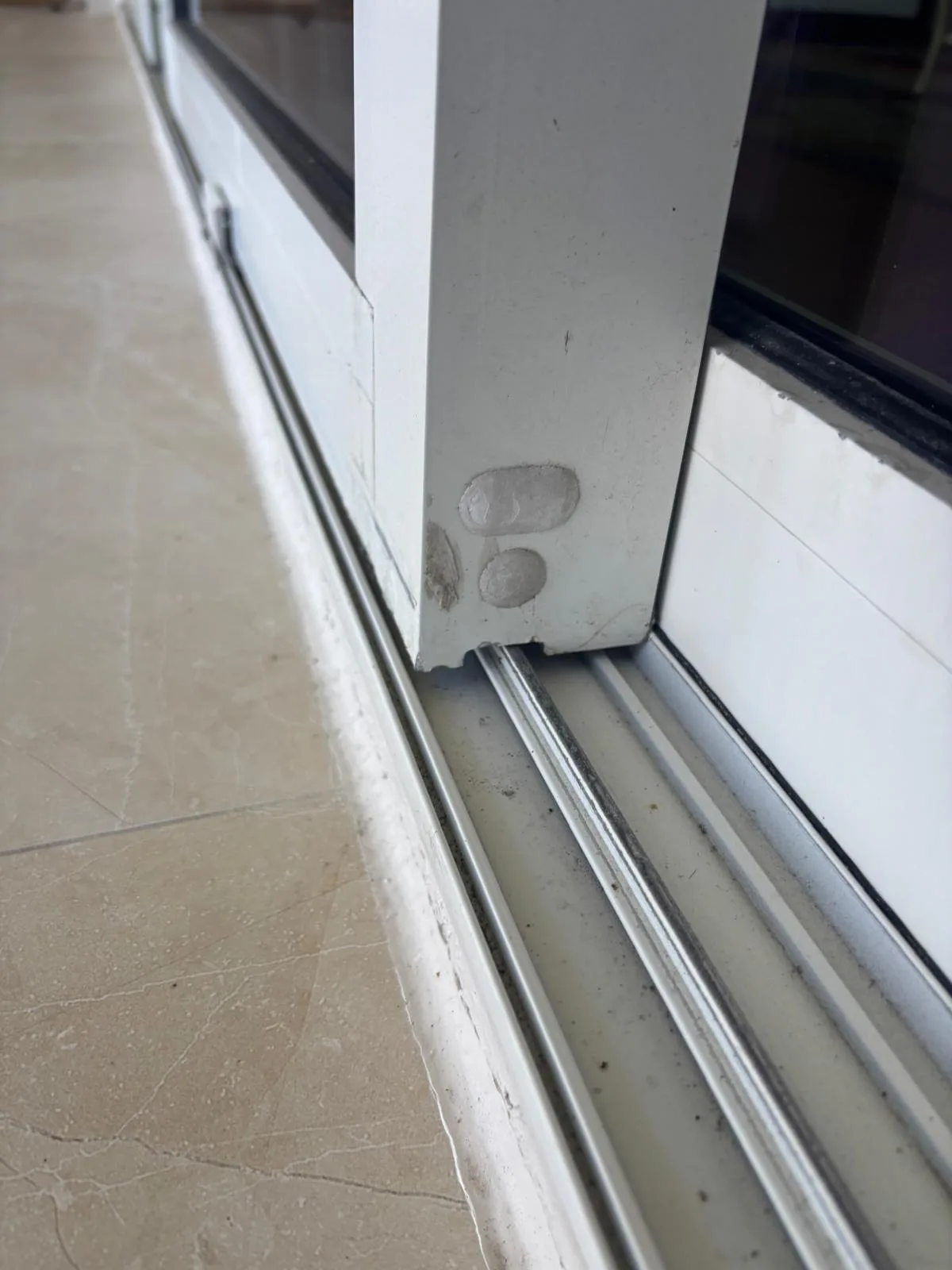
What You Need
- A vacuum with a crevice tool.
- An old toothbrush or a stiff narrow brush.
- A thin flexible wire or a pipe cleaner for the weep holes.
- Warm water with a little dish soap.
- A dry PTFE or silicone spray lubricant.
That is genuinely the whole list. Nothing here is specialist, which is part of why it is worth doing yourself.
Step One: Get the Loose Debris Out
Run the crevice tool along the full length of both channels, then along the raised rolling surface between them. Slide the panel to the other end and do the section that was hidden.
Most people stop here, and it is the least useful part. The material that causes wear is packed down in the corners, not sitting loose on the surface.
Step Two: Scrub the Packed Material
Wet the brush in warm soapy water and work along the corners where the channel wall meets the base. That compacted grey material is the abrasive that cuts rollers, and it needs mechanical agitation to release.
Vacuum again once it is loosened. Repeat on the rolling surface itself, paying attention to any groove you can feel with a fingernail.
If you find a distinct valley worn into that surface, cleaning will not fix it. That is a track repair question, because a grooved sill destroys new rollers.
Step Three: Clear the Weep Holes
This is the step that matters most and the one nobody does. Sliding door sills drain through small openings at the outside face, and when those block the sill holds water.
Find the weep holes on the exterior side of the track, work the wire gently through, then pour water into the interior channel and check it runs out. If it does not, the channel is still packed.
A sill holding brackish water is how corroded sills start. Aluminium copes with fresh water indefinitely and salt water badly.
Step Four: Lubricate Correctly
Use a dry PTFE or silicone spray. Apply it lightly to the rolling surface and to the roller wheels themselves, then slide the door back and forth several times to distribute it.
Do not use oil, grease, or a general-purpose penetrating spray. They feel effective for about a week, then behave like flypaper for sand, and the resulting paste cuts both the wheels and the sill.
Less is more. A drenched track collects more grit than a lightly treated one.
How Often
Vacuum monthly, do the full clean twice a year, and more often if you are near open water or the door is used constantly.
If the door is still stiff after a proper clean and lubricate, the problem is not debris. That is normally worn rollers or a panel that has dropped, which are covered under roller replacement and alignment.
More From the Blog
Need a Sliding Door Looked At in Stuart?
Tell us what it is doing and we will tell you what it needs, with a price range before anyone comes out.
Call (772) 279-9387 Request a Quote